Showing posts with label google pls. Show all posts

Saturday, March 2, 2013

Cube Artist Martin Sevcovic Gallery Opening at Magna


One of the greatest enjoyments I have had living in Slovakia is experiencing the culture.  Last night I was invited by one of my English students, Adriana Drahovska, to the opening of a young artist, Martin Sevcovic at the Magna Gallery in Piestany.  The gallery is owned by Kursalon and Adriana’s sister Dagmar (pictured below) is the manager.

Adriana (left), and Dagmar Ondkova (center)
introducing Martin Sevcovic (right) at Magna Gallery, 1 March 


Mr. Sevcovic’s work from 2006 through 2012 will be displayed in the gallery during March.  The artist is showing his progression over the six years culminating in the cubist form shown below.


Martin Sevcovic 2012
The evening was topped off by a glass of wine at a local jazz club.  Just another wonderful memory of my current home in Piestany.


Thursday, February 14, 2013

Slovakia's Winter Wonderland

It has been a while since my last post.  I've been struggling with a cold and after a day of classes, I just want to come back to my flat and sleep.

I have been able to take a few photos of Slovakia's winter wonderland in Piestany and nearby Zilina.  Here are some photos for your enjoyment.  There are many parks weaving throughout Piestany dotted with sculptures and monuments.  It was lovely to walk down the paths blanketed with snow.


Zilina

The region of Zilina adjoins Poland to the North and the Czech Republic to the West at the base of the Mala Fatra mountain's. Zilina is the third largest city in Slovakia (Bratislava is first and the capital and Kosice is second, located in the East).


The restored 14th century buildings in the Farska Square are the Old Town Hall and Baroque Church of St. Paul (Pavel). 


On a hillside at the West end of the town stands St. Church of St. Stephen (Stefana), one of the oldest in Slovakia.


Friday, January 18, 2013

Amsterdam; bikes, canals and of course coffee shops


Famous Amsterdam art sign with Rijksmuseum in the background

BUT...Amsterdam is so much more. With over 900 years of rich, vibrant, artistic history, Amsterdam has something for everyone. The city is actually the juxtaposition of the past and future.  The architecture is quite unique, both modern and ancient.  Here is a city literally built on piles driven deep under the water to anchor buildings, woven around over 100 canals leading the water safely out of the city. What a design marvel it is.


You can see how the houses are leaning
Most of the city's houses are naturally built around the canals. Piles are used to "hold up" the houses and are fortified deep below the water.  

Many of the elegant ones were built in the 17th century.  


The hoists atop each house are still visible.  Even today they are used to lift furniture up and into the houses because the stairways are extremely narrow.


Warehouses have now been turned into flats (apartments), many retaining their unique gables. A maze of pipes inside carried water from rooftop cisterns for use in the event of fire, what we now call a sprinkler system.  


In the 1880's the main harbor was filled in to build Centraal (Central) Station (a grand piece of architecture too) ending the profitable relationship the city had with sea merchants. 

Centraal Station is a great place to start your journey of the city.  It is quite easy to walk around Amsterdam or you can take the trams.  Be sure to buy a three day pass, if time allows, because it will save you quite a bit.  The pass is 16 Euro and if you take the tram often each ride is 2 Euro so it can add up quickly.  


Centraal (Central) Station in background


Make sure your first stop is Dam Square.  The locals call it "The Dam" and it marks the original site of the dam on the Amstel River. The various architectural masterpieces span six centuries and include the Nieuwe Kerk and the Koniklijke Paleis.  The Koniklijke Paleis (Palace) was the town hall in the 17th century and is still used for special occasions.


Atop the Paleis (Palace) at the Dam

Amsterdam was first settled in 1125 by fisherman, ruled by Louis Napoleon (Bonaparte's brother) in 1778 and final established as a Kingdom of the Netherlands in 1806. The History Museum is close to Dam Square and provides a detailed account of the many successes and failures throughout the centuries.
National Monument

Koninklijk Paleis (Palace)
Afterwards walk a few blocks to the Jordaan area and take a tour of the Anne Frank Huis (house).  Besides the deeply reflecting and quiet courage of this young girl, the story of Anne Frank will bring to you, the Jordaan is one of the most beautiful areas of the city.  


The tree in this pic is the one Anne Frank speaks of in her book
Make sure any tour and museum visits are done early in the morning as the lines will be long.  I visited over Christmas and the waiting period wasn't too bad early in the day.  The Anne Frank Huis (house) tour is one of the least expensive tours I took and quite worth it. 

Right outside the Anne Frank haus you can catch a canal tour boat that will take you through some of the most famous views of the canals in the city.  Many of the house boats you see are quite "pricey", many selling for as much as 500,000 Euros.


Bikes, bikes, bikes...don't even think of hitting one
Yes, there are hundreds of thousands of bikes in Amsterdam...and don't even think of hitting one.  They are completely protected by law and have the right away before cars!  Lock them up if you decided to rent one, because if you don't you may find it in the canal.

Museums

Amsterdam is known for its vast and exquisite museums.  I really wanted to see the Van Gogh museum but unfortunately it is closed until summer 2013.  However, many of his famous painting are on display at the Hermitage Museum on the Amstel River. You will be able to see some of his most famous works; Self Portrait of an Artist, Sunflowers and my personal favorite, Almond Blossom, Van Gogh specifically painted for his nephew.  If I could have figured out a way to take a print with me I would have.  I absolutely love this painting!


There is a "Dream Exhibition" in Dam Square of his artworks you might want to see as well. 


Not far walking distance is the Rembrandt House. Museums, galleries and tours are quite expensive so I suggest working with your hotel or visiting the tourist center in Dam Square for attraction coupons.  

Rijksmuseum


I chose to visit the Rijksmuseum to see Rembrandt originals and I'm very happy I did.  Rembrandt's Self Portrait as St. Paul and the famous The Night Watch are particularly spectacular. Johannes Verspronck's Portrait of a Girl Dressed in Blue is an example of his signature style.  Many of seen this painting as a print and will recognize it immediately.

Coffee Shops & Red Light District

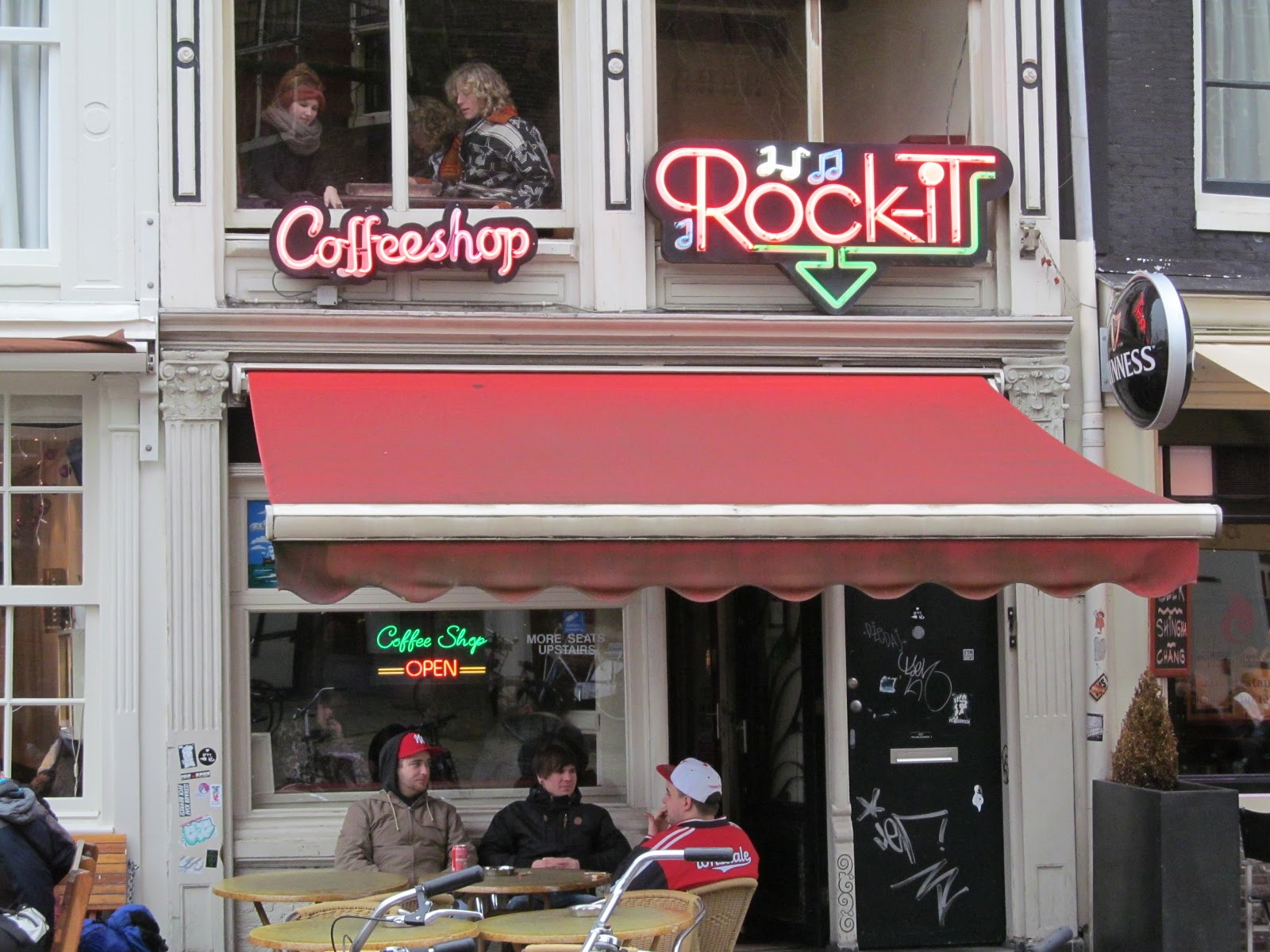
What would any article on Amsterdam be without the mention of Coffee Shops and the Red Light District?  Actually, it is true the coffee shops are everywhere.  But as a friend of mine (who now lives in Amsterdam) pointed out, "Most Dutch don't frequent them. They are only visited by Brits and Americans." I have to say I didn't visit one myself but I did walk by and found the atmosphere rather tame and the aroma rather pleasant.  This was also true for the Red Light District. Granted, I was alone on this trip so partying wasn't exactly "in the cards" for me, so to speak, but Amsterdam has so much to offer that night life is really only one element. 

If you do want to find out more about Coffee Shops or the Red Light District, be sure to take the tours that are offered describing how coffee shops were established, what the rules are, etc.  It costs about 12 Euro for those "enquiring minds".

Food and Language

The food in Amsterdam was truly wonderful and I enjoyed every meal.  The food can be expensive in restaurants so you need to walk the streets to find the best prices.  There are street markets everywhere and you can find some good deals.  No need to worry about the language.  Although Dutch is obviously the official language, English is spoken everywhere.  

This photo is just an example of the fresh food that can be purchased in the outside markets. I didn't realize it until after I took this photo there was a sign that said, "No pictures".  Oops!

Can you believe all this cheese?
There is also a dutch treat I tried, Bitterballen.  It's a tapas-like deep-fried meatball that is crunchy on the outside and soft on the inside and served with mustard.  Its great with a Pils or Witbier, or for that matter, any beer will do.  Speaking of beer...you might want to take the Heineken Experience near the Rijksmuseum. The outside of the building is completely surfaced with Heineken bottles.


I was only in Amsterdam for four days and I feel as if I didn't even scratch the surface for seeing all the city has to offer.  I've heard Spring is beautiful there so I'll have to go back and experience the tulip festivals and music extravaganzas. 

Other photos

Here's some other photos for your enjoyment...

Just stand outside and breath

Dam Square bikes on the plaza


The Sisters

Obvious


Friday, January 11, 2013

Bruges, Belgium's Historic Gem

If you haven't seen the film, In Bruges, with Colin Farrell, Brendan Gleason and Ralph Fiennes, be sure to rent or download it.  It was filmed in Bruges. I saw it a few years ago and after seeing the film definitely wanted to visit Bruges.  I wasn't disappointed.  This pocket book size medieval city was Europe's trade center and wealthiest until the 1500's.  Unfortunately it fell into obscurity for almost 400 years. Then, in the late 19th century the lace cottage industry brought the city back from poverty.

I arrived Christmas Day morning, the weather was clear and the sun shinning.  I couldn't stop taking photos except for a breakfast break of Belgium waffles with cream.  Yum!  Once I was fed I started my tour in the Markt or Central Marketplace.  The step-gabled guild houses are the main feature of the square.


Markt

The Provinciaal Hof, is a late 19th century design and is the main government building on the east side of the square.
Provinciaal Hof 
The Belfort plays an essential role in the film and is quite impressive.  Climb to the top of the belfry and you can see for miles.  Bring your walking shoes, there are 366 steps to the top.

Belfort


The Burg in Bruges is the focal point of the older part of the city.  It is filled with classic architectural buildings like the Stadhaus below when Bruges was the hub of international trade.
Stadhaus
The Stadhaus is one of the greatest medieval secular pieces of architecture in Europe.  It is the town hall and was originally constructed in 1372-1420 but was renovated in the 19th century.

Bruges has a beautiful canal that runs through the city. One after one, each building is more interesting than the next.


One of four surviving gates to the city
There are some wonderful museums in Bruges showing the finest in medieval art dating from the 1300's.  Unfortunately I was there on Christmas Day, so the museums were not open.  The two museums with the most incredible art selections are The Groeningemuseum, a short walk from the center of town and The Memling in Sint-Jan-Hospitaalmuseum.  The latter museum is  part of a medieval hospital.

Here is a selection of other photos I thought best represents Burges.  If you happen to visit Belgium, don't miss Bruges.  It is a piece of history that cannot be ignored.


Friday, January 4, 2013

Les Miserables Author, Victor Hugo's Brussels

Victor Hugo (1802-1885), the author of "Les Miserables" had a special relationship with Brussels.  When I went to visit the city on Christmas holiday, I decided to take a view of Brussels as seen through Hugo's eyes.

As a political refugee in 1852 Hugo found a safe haven in Grand Place.  In 1862 all the talk in Brussels was about Hugo's "Les Miserables", which was published by a Brussels publishing house.


Grand Place
Masion du Roi
Masion du Roi is a medieval-style "King's House" and is now home to the Musee de la Ville de Bruxelles (museum of Brussels), a miscellaneous
history of the city.

The houses in the Grand Place are built in a Renaissance style of the late 16th and 17th centuries.

The Grand Place is one of the main tourist attractions in Brussels.  I was there Christmas Eve day and the square was filled with people from all over the world.  I could hear Japanese, Korean, Australian, Spanish and of course, British English.  I'm sure I wasn't the only American, but I didn't hear my particular accent in the square.  Hugo's flat was in the Le Cornet looking out over the square.


Around the Grand Place

The Le Cornet was once a boatmen's guild house. The far right building includes six figures representing the  essential elements of bread making and is called Maison des Boulangers.
Galeries Saint-Hubert
No doubt Victor Hugo would have shopped in this 19th century arcade, Galeries Saint-Hubert at the time was the longest covered shopping arcade in the world.  Many exiles, like Hugo, would meet at one of the galleries.


Saint Catherine Church
St. Catherine's church was near my hotel and the front square was home to the Christmas markets. 


The church is under renovation or "cleaning" as shown in the picture left.  You can see the dramatic difference from the cleaned side and the worn side of the church.


Cathedral of Saint Michael & Saint Gudula

From his first visit, Hugo was fascinated by the Cathedral of St. Michael and St. Gudula because it reminded him of Notre Dame in Paris.  I've seen Notre Dame and I have to agree.  The Gothic style is quite similar.  A more up close photo of the church is below.


Central Brussels 

Central Brussels is shaped much like a pentagon.  Walking through Brussels is quite easy and you can spend a couple of days and see the whole city. Central Brussels is known as the aristocratic upper town.  The area is filled with parks, restaurants, bars and monuments.  

Place du Congres Congresplein


Victor Hugo's home is located in Place des Barricades, a beautiful neoclassical home.  The plaque below bears his signature with the words, "I am the brother of all people and the host for all peoples." Like Victor Hugo, I did fall in love with Brussels European Capital feel of people, culture and commerce.  


Outer Brussels

Just outside the city center is the lovely Parc Leopold named after King Leopold II.  He was Brussels second king from 1865 to 1909.  Although he did preside over and created a modern and thriving Brussels he was also quite ruthless and many people died under his reign. One of the highlights of this area is the Antoine Wiertz museum.  Wiertz fashioned himself on the level of Michelangelo and felt Brussels was every bit an artistic community as Paris. The museum is his studio and is quite small but impressive just the same.

Parc Leopold
Wiertz Museum is on the right

Other Bits of Brussels Architecture, Life & Culture

Getting to the outer part of Brussels is quite easy and efficient with their public transit system.  Buy a pass and start traveling.  The system is fairly easy to follow and if you get lost, don't be afraid to ask directions.  Belgians are quite friendly and helpful.

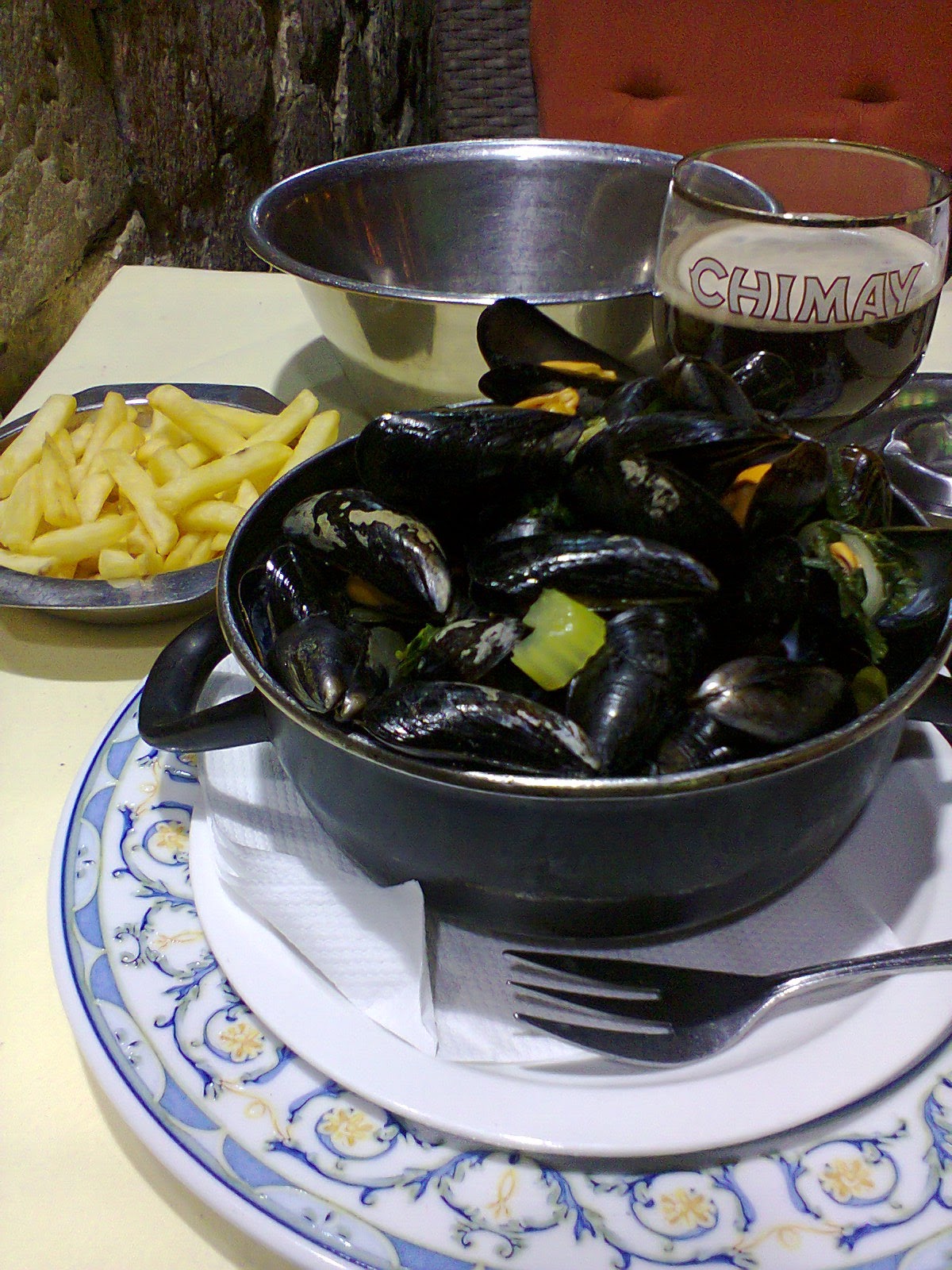
I would be remiss if I didn't mention the one thing that I really loved about Brussels...mussels.  Mussels are one of my favorite foods and they are plentiful in Brussels.  Food is expensive but really very good.  I did happen to find a little restaurant off the Grand Place that actually had mussels, fries and beer (Chimay Blu is my favorite) for only 10 euros! 

Christmas Eve Meal...Yum!
Just a few other photos...


My next post will be on one of Belgium's most beautiful and architecturally magnificent cities, Bruges.