Showing posts with label Central Europe. Show all posts

Thursday, November 26, 2015

They’re Open! The Christmas Markets of Central Europe

Bratislava Christmas Market (ariel view)

In central Europe the Christmas markets are here! If you haven’t seen the Christmas markets in Vienna, Bratislava or Krakow, you are really missing something.

There are many other Christmas markets around Europe, but one of the wonderful parts of living in Slovakia is that it is in the center of the center of Europe, so it is easy to see some of the world’s most attractive and unusual Christmas markets and in my humble opinion, they are not to be beat.  

In Slovakia, every little village or city has a celebration with varené víno (hot wine), klobasa (sausages) lokše (Slovak-type tortillas filled with jams or pate) and punc (punch) permeating the town square. People gather for eating, drinking and conversation, plus some holiday shopping at the various kiosks woven throughout the streets.

You can visit one city or better yet, take a tour of central Europe markets; starting in Vienna, a short trip to Bratislava and then one of my favorites, Krakow (Cracow). 

In 4 or 5 days you can see the best Christmas markets and shop ‘til you drop in some of the most beautiful and historic cities in Europe.

Or maybe traveling through little villages in one country and experiencing the markets is more to your liking. Slovakia is one of the most scenic and culturally interesting countries in central Europe with 14 different UNESCO sites.

Start your Christmas market journey in Bratislava’s old town, nestled just below the memorable castle where Queen Sissi (Elizabeth), Empress of Austria and Queen of Hungary in the 1800s, favored the castle as one of her homes. You’ll find the best markets starting at the ice rink near the Slovak National Theatre and moving along the Danube towards the center of town. Once you are in the center of old town, the two main squares are packed with shopping, food, drink and entertainment on the main stage. Bratislava has a mixture of historic and modern architecture fixed side-by-side with great eateries and pubs.

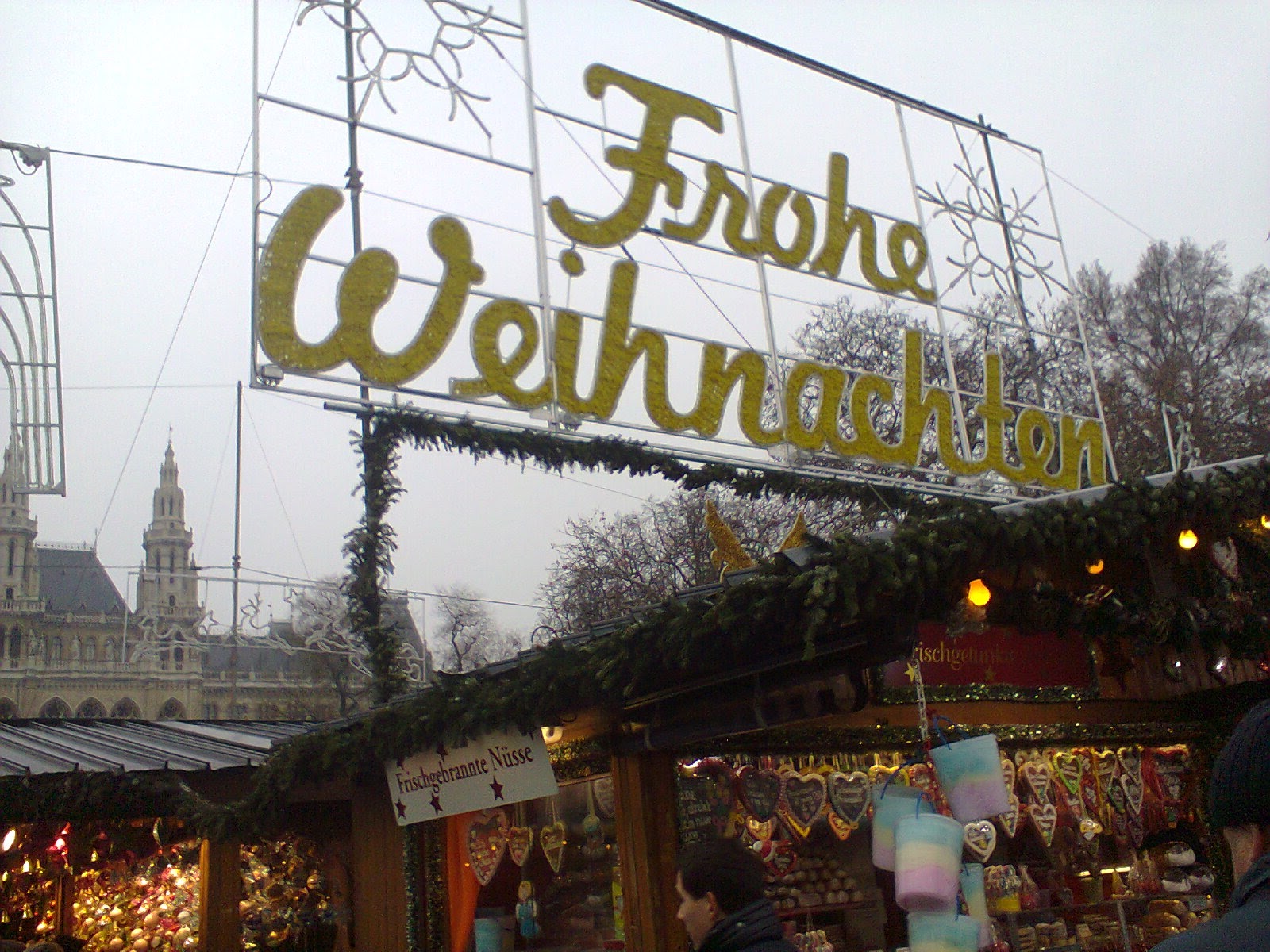
Rathhaus Platz Vienna

From Bratislava hop on a train across the Danube to Vienna. Vienna boasts some of the most amazing Christmas markets in central Europe. There are three major areas from the city center and easy to walk through in one day.

Start at Stephansdom walk down Karntner Strasse to the Opernring (Staastsoper) to the Maria Theresa Monument for a small, but very pleasing market and then end up at Rathaus Platz for the largest market in Vienna filled with row after row of shopping stalls, food, wine, beer of course, and cakes. There are rides for children and you can easily spend most of your day at this market.

Finally, I mentioned Krakow where I spent an after Christmas holiday. Before you take in the local flavor of the Jewish Quarter and the Royal Castle on Wawel Hill, make sure you head towards the main square where there is the largest inside and outside market in central Europe. 

Krakow was put on the UNESCO World Culture Heritage list in 1978 and was the culture capital of Europe in 2000. The main square or market square has the clock tower on one side, the Cloth Mall in the middle with the impressive St. Mary's Basilica, flanked by St. Adalbert's Church. The Christmas market will be in full swing even after the new year, with lights and kiosks full of fare to eat, drink and buy.  I picked up a nice Polish pottery piece.


Whether you want to take in the top cities in central Europe or travel through Slovakia to the many quaint villages and towns, like Piešťany where I live, rich with historic significance, spending a Christmas market holiday in central Europe is sure to provide seasonal cheer.

Piešťany Christmas Market

Christmas Tree Lighting 


Sunday, December 23, 2012

Christmas Markets in Vienna

Starting my holiday vacation in Vienna was the right course.  I had heard the Christmas Markets were amazing but I didn't realize how many there would be throughout the city.  Starting in Stephansdom surrounded by Christmas Tree stands, holiday shoppers and the smell of cinnamon and hot wine, I traveled around the Opernring past Burggarten to the Maria Teresa Monument and Maria Teresa Platz. The square was filled with people and lovely kiosks selling everything from food, wine, beer to Christmas ornaments and other trinkets.


Christmas Market at Rathauspark
The Christmas Market at Rathauspark is one of the largest in Vienna with rows and rows of Kiosks.  The market is situated across from Brugtheater and in front of Rathauspark town hall, the site of many events all year long.  The park is filled with monuments, fountains and extraordinary trees.


I understand there is a wonderful market (and much bigger) at Schloss Schonbrunn but I wasn't able to visit this market.  Maybe next year?

After a nice and stimulating dinner with my friend Maria Petrak and new friend Max Mairhofer, I went to the Magic Trumput Advent Concert.  It really wasn't what I expected.  The instruments and vocalist were behind the audience in the balcony of St Anne's church.  It was quite solemn and not at all happy and cheerful for Christmas.   

Now it is waiting for a flight out of Vienna to continue my trip to Brussels.  Look for most posts this holiday week and I hope you are enjoying this time of the season.


Monday, December 3, 2012

Christmas Markets Open in Slovakia

'Tis the season of chestnuts roasting on an open fire, sleigh bells ringing and the voices of children singing Christmas carols.  In Slovakia it is time for the Christmas markets.  The season is marked by Advent in this primarily Catholic country.  The lighting of the village Christmas tree begins the Christmas markets.  

Christmas Tree in Piestany
At around 4pm, just as the sun is setting, the tree was lit in the main square followed by children dancing and local bands playing Christmas favorites such as Silent Night and traditional Slovak folk music.

The Christmas market size really depends on the village community.  In Piestany the tradition is only about 10 or 11 years old.  The Christmas market began in large cities like Bratislava, post Soviet rule, but has moved to all villages across the country.


Christmas Market in full swing
In the markets you will find Grog (hot rum), Punc (wine & rum punch) or mulled (hot) wine.  Try a glass of your favorite drink with Lokse, a potato pancake filled with savory goose liver or cabbage.  The pancake is made with flour, egg and boiled mashed potatoes. The mixture is put into a hot pan but not fried. I tried both the liver and cabbage and was pleasantly surprised.  I really enjoyed the taste. Normally I wouldn't even try liver but this was quite good. There are plenty of homemade cakes and cookies too.
Punc (Punch) Hot Wine with Rum

Lights in the park square

Getting Ready for 2013
The Christmas markets will be open through Advent.  This is one tradition in Slovakia I can really get behind; hot drinks, home made cakes, Lokse and of course, everyone meeting and greeting to wish each other a wonderful holiday.

Monday, September 10, 2012

Living Abroad, How to Make it Work


I thought I was so prepared for living abroad, and so excited to hear from a school in Europe regarding my CV, that I really didn't do my due diligence as I should have in checking out the school, city and all the details. 

Slovakia is a lovely country with mountains and valley, open spaces and little villages dotting the countryside. The town I live in, Trencin, is historical and quaint. I don't consider my move to teach English in Slovakia a mistake by any means, but there are some helpful tips I would like to give those seeking to teach outside their native country.

View of Trencin Castle from the village below
Working Visa

First and foremost find out the work visa process for the country you are moving to.  Country work processes vary and although I had done some checking on an FBI report, finger prints, etc., there are other aspects you should try to learn about beforehand.  

For instance, I knew it would take time to apply for an FBI check and the fingerprinting (I mentioned in a previous post), but what I didn't realize would be the time it takes once you are in the country.  It has been almost eight weeks since I arrived in Slovakia and met with the foreign police (with my boss) and I still don't have my work permit.  Once you are in a country for 90 days, you will need to leave the country and start the process again.  Obtaining a work visa is the most critical process to working in another country.  In Europe it can be difficult because of the European Union.  Many schools, both private and public, need to try and hire Europe Native English speakers first before U.S. or Canadian citizens. I hoping I'm almost through the process and will have a work permit card in the next week or so.

Health Insurance
My school said they will provide the health insurance.  What this means is they will pay for the "check up" at a foreign medical center for the work visa. The reason I put "check up" in quotes, is it really isn't an examination. My male boss took me to a clinic over an hour away from Trencin and the facility was extremely dirty and in Slovakia there isn't a sense of privacy so you will need to prepare yourself.  Most likely there will not be anyone that speaks English. Healthcare in Europe is Universal, so the school isn't paying for your healthcare.  They are only paying for the lab work to obtain the visa.  Healthcare is paid by the government. 

Language
As you might imagine from the two above topics, speaking the language becomes very important.  Most applications will state that it is not necessary for the teacher to speak the country language, but in fact, it will help to have a basic knowledge so you can ask questions and understand the answers.  I don't speak Slovak so it has been a real challenge for me.  There isn't an expat community in Trencin and only one other English speaking teacher at the school. I'm starting to pick up the language slowly but if you want to order a meal in a restaurant, buy a train/bus ticket or of course, speak to a physician, or foreign police it is essential. 

Accommodations
If your school states they will supply accommodations plus pay, make sure you understand what the accommodation looks like and how much the school is paying for the flat.  My accommodations are quite honestly pretty bad.  Many teachers have lived in the flat and it hasn't been cleaned, painted, has old used mattresses, a stove that doesn't work, etc.  Have the school send you picture’s of the unit before you decide and ask them how much they pay monthly for the unit and what the cost includes.  Then, check out for yourself what the cost is for flats in the town. Also find out if you will need to bring towels, linens, and other types of those items before you leave. 

Pay
When a school states they will provide accommodations and pay you a certain amount of money, don't take their word for it that it is "enough to live on".  I have found food may be less expensive in Slovakia but nothing else is.  Clothing, shoes, even tickets to the movie theatre are as expensive as in the U.S.  Therefore, the amount of money I am receiving is quite low, even compared to other school salaries.  Make sure you understand when you will be paid.  For example, I work for one month and on the first of the following month I will be paid half a month's salary.  In my case I will need to supplement my income by 100-200 Euros a month just to live, not for travel.

Working Hours

Make sure you understand how your schedule will be created and when you will be notified as to your classes, book curriculum, number of students and level of the students you will be teaching.  Research what the country dictates in relation to hours worked and time off.  Don't be taken advantage of because you are coming from another country.  Hold the owners of your school to country hourly pay and time off regulations. On most days I start at 7:30 a.m. and end around 7:00 p.m.  

The students are really amazing.  They want to learn, are open and participate.  The teaching varies from one-on-one to classes of six; from children aged 7-9, to teens and adults.

As I said when I started, moving to Slovakia has been a great experience. It is a beautiful country and I'm excited to see more of it and the surrounding environs.  

I hope these tips will be helpful for anyone thinking about living abroad.  Please feel free to contact me with any questions or feedback through this blog.

Please feel free to check out my Facebook page for more photos.


Friday, July 13, 2012

First Stop Vienna - Part II

Vienna Part II

I can't believe it is only a few days until I begin my new adventure starting in Vienna.  It is amazing how little I really need.  I've whittled down my belongings to two suitcases.  Seeing friends and saying goodbye to family has marked my last few days in the States.

In my Vienna Part II post I'm concentrating on some of the places I will focus my short time in the city.  I'm really looking at the three days I will be in Vienna prior to traveling to Slovakia as a way to see what I want to concentrate on the next time I visit the city.  I'm hoping to be able to see Vienna several times over the next year as it is relatively close to where I'll be living in Slovakia.

Vienna History

Karlskirche Church Mosaic
Since World War I, Vienna has been the capital of the Republic of Austria.  Vienna began as a Roman settlement known as Vindobona (meaning good wine) and subsequently became one of Europe's main trading hubs under the Austrian Habsburg's.  During the 19th century Vienna became the capital of the Austrian-Hungary Empire.  

As is the case with most Central European cities, old and new live next to each other in architecture and cultural sensibilities.


As much as politics have played a role in all of Central Europe, the church has dominated the culture and social mores more than any other institution. The Karlskirche Church was build between 1715 and 1737 to honor a patron saint for his work against the plague that claimed more than 8000 lives. The Karlskirche is a renown Baroque masterpiece.  

The Belvedere Upper Palace

Another Baroque heavyweight is The Belvedere Palaces.  Commissioned in 1714 by one of Habsburg generals, Prince Eugen of Savoy, after he received a large reward for his victories during the Spanish Succession. There are two palaces and were used as his summer homes.


The summer residence of the Habsburg's, Schloss Schonbrunn was build after the Turkish Siege between 1695 and 1713.

There are 10 top features to the palace but I'm not sure I'll be able to see them all.  I think I'll concentrate on the Grand Gallery, Napoleon's Room and the Empress Elisabeth Salon.  
Let's face it, a girl always needs to see the Salon!

Underground Vienna

Michaelerkirche Crypt
I definitely want to see "underground Vienna" with all its history and macabre glory. One such feature is the  Michaelerkirche Crypt.  The Crypt contains well-preserved mummies still wearing I definitely want to see some of the underground sites in Vienna.  One is theBaroque frocks and wigs. 

In the Middle Ages many of the Viennese houses had wine cellars.  The cellars stored vast vats of wine, vegetables and other goods.  Some of the cellars were destroyed in construction of the metro underground transportation system.


All my following posts will be "on the road" or from my residence in Slovakia. 


If you'd like to follow the posts, please subscribe by clicking on the "subscribe" button in the right nav bar or following me on Twitter @steelbird323.


Auf Wiedersehen


Monday, June 18, 2012

Where is Slovakia anyway?

When I found out I was going to moving to Slovakia I have to admit I wasn't really sure exactly where Slovakia is located. I had traveled to Prague a few years ago so I knew Slovakia was southeast of the Czech Republic. I put on my journalism cap and started researching.

I found out most people think Slovakia is in Eastern Europe.  It is actually the heart of Central Europe, with a dynamic economy and a wealth of natural resources; the Tatras Mountain range, lakes and valleys plus spectacular ice caves and national parks.  Slovakia is made up of three regions; west, central and east all with their own unique and beautiful attractions and rich folk culture.

Tatras Mountain Range
For nine centuries Slovakia was a province of the Kingdom of Hungary and for 70 years during the 20th century, part of Czechoslovakia, gaining its independence in 1993 called the "Velvet Divorce." In 2004 Slovakia became a member of the EU and NATO.

Bratislava (originally known as Pressburg) is the capital of Slovakia and was the capital of the Hungarian Kingdom forming much of the culture and architecture of the country. For centuries churches, particularly Gothic and Baroque monasteries, dominated the landscape until the 19th and 20th centuries when development of urban architecture took hold.

Bratislava straddles the River Danube at the southern end of the Small Carpathian Mountains, approximately 1 mile to the border with Austria and is only 6 miles to the border with Hungary. Both countries can be seen from the Bratislava Castle.  

I'll be staying a few days in Bratislava in the old town centre. Bratislava is a walking city (my favorite)! I didn't realize until my research Slovakia has quite an extensive wine-growing region. Fortunately there are day trips. Trencin is only an hour from Bratislava so I'm hoping to enjoy several wine tours.

Having already traveled to the Czech Republic I know pork is a Slovak staple. Unfortunately I don't eat pork so I'll be looking for several other types of recipes. Fortunately Slovak vegetables and fruits are plentiful. Halazsle, a spicy fish soup will be top of the list. AND pivo (beer) is exceptional in the region.


Clockwise from top of left: View of Novy Bridge, Danube River and Old Bratislava from Castle of Bratislava, St.Michael Gate, View of sunset in Danube River, Slovak Parliament and Bratislava Castle, Statue of Tof Slavin, Peace Earth sculpture fountain in Hodzovo Square, Bratislava Castle and fortification.

While I'm not wine touring or drinking amazing beers, I'll be hiking off the pounds in many of the walking trails. There are various types from fairly easy to difficult hikes from the Vihorlat ranges to the High Tatras. Obviously with these types of mountains skiing and snowboarding Slovakia is ideal for winter sports. I'll probably stick to cross-country skiing in the lower ranges.

Slovakia is famed for its mineral spring spas. There is a health resort in Piest'any (not too far from Trencin) I plan on trying out. Climate ranges from cool summers to cold, rainy winters. Sounds like the mineral waters will be a welcome relief in the winters. 

I'm told there isn't much of a nightlife or entertainment in Trencin, but Bratislava is an active city around the clock. During the summer there are beer, wine and music in outdoor areas throughout the town. Some music clubs are even housed in post-Communist nuclear shelters. Being a film enthusiast I'm not sure I will be able to go to an English theater but I understand many of the films are subtitled. However, it might be fun to see a film in Slovak. It would be a good way to learn the language.

One of the teachers sent me several links to Slovak online magazines and newspapers. I'm reviewing them now for tips. I've added them into my favorite links for those interested.

Trencin Castle
My next blog will concentrate on Vienna, my first stop on the journey. If you want to follow my blog, please subscribe or follow me on Twitter @steelbird323.